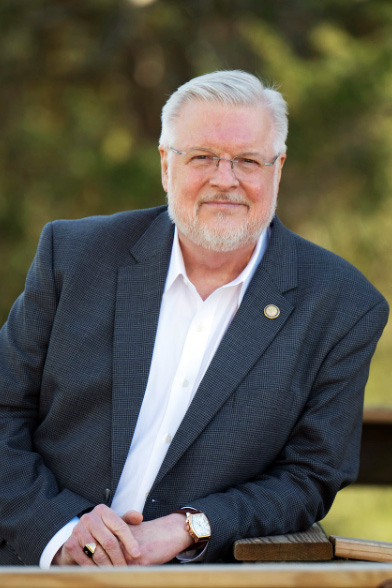
Rev. Mark H. Creech


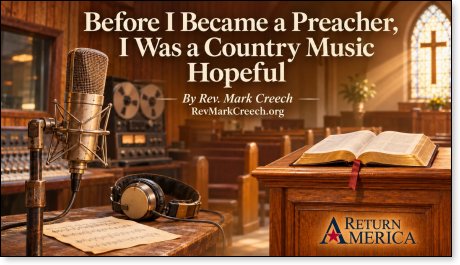
Long before I ever stood behind a pulpit, I stood before a microphone in a Nashville recording studio, dreaming of a very different future.
I was about thirteen years old, recording under the name Mark Howard for Target Records. The sessions took place at Woodland Sound Studios in East Nashville, one of the city's respected independent studios, where accomplished musicians, producers, and recording artists worked.
For a boy my age, it was an exciting place.
I recorded two country-style recitations that blended spoken storytelling with singing. Neither was released commercially, but the experience strengthened my belief that I had a promising future as a country music artist.
My mother, Alice Creech, was pursuing a country music career and making remarkable progress. Her recording of “The Night They Drove Old Dixie Down” reached No. 33 on Billboard's country singles chart, No. 26 on Record World, and No. 24 on Cash Box. My father, who managed her career and tracked her chart positions closely, told me years ago that the recording had reached No. 9 on Billboard. I have not found that listing; perhaps it appeared on another chart. Whatever the explanation, after less than five years in the business, she was clearly an up-and-coming singer.
I followed in her footsteps and worked with some of the most influential figures shaping Nashville's music industry.
Two names stand out in particular: Kelso Herston and Don Tweedy.
At thirteen, I didn't fully appreciate their accomplishments. Herston was a session guitarist, producer, and record executive who worked with some of country music's biggest names. Among his achievements was producing thirteen consecutive No. 1 records for country singer Sonny James. He later became the music director for the popular television show Hee Haw.
Tweedy was a highly regarded arranger whose work helped shape Bobby Goldsboro's sound. His credits included “Honey,” “Autumn of My Life,” and “The Straight Life.” A 1968 Record World article reported that fifty records he had arranged had made the charts that year.
These were professionals whose work reached millions of listeners.
I also remember remarkable backup voices. Some of the female singers may have been members of the Anita Kerr Singers. I remember an extraordinarily deep bass voice that I have long associated with J.D. Sumner, who led the Stamps Quartet. After more than fifty years, I cannot be certain of their identities, and I haven't found session credits to settle the question. Whoever the singers were, hearing those remarkable voices backing my own was an amazing experience.
The musicians later told me they hadn't expected much when they learned they would be recording with a thirteen-year-old boy. They anticipated a long, grueling session helping a youngster get through material he wasn't ready for or lacked the talent to perform. By the end of the session, however, their attitudes had changed completely. They showered me with compliments and said they expected to work with me again.
Herston was especially encouraging. “I believe you're going to be a big star one day,” he told me.
I have never forgotten those words.
Success was hardly guaranteed, but the opportunity was substantial. Experienced professionals believed in me, and I believed in myself. I knew I had a natural talent for performing. In my mind, a country music career seemed entirely within reach.
A June 1971 issue of Studio Sound magazine offers a brief piece of historical confirmation. An item on Herston's production work reported:
“Kelso also produced a single for Target Records, featuring 13-year-old Mark Howard, with Jack Reno and Alice Creech.”
There were our names, in print, more than half a century ago. Recently, finding that passage felt like opening a window into a world I hadn't visited in a very long time.
But my life was about to take a different direction.
As I look back, I cannot place every event from those youthful years on a precise timeline. But I remember how coming to know Jesus Christ changed my desires and my understanding of what my life could become.
I became so enthusiastic about my newfound faith that I talked about Christ to practically everyone I encountered. My friends knew that spending much time around me meant they were likely to get an earful of the Gospel. Some began calling me “Jesus Creech.”
My conversion and my call to preach were closely connected—perhaps only a year apart. What began as an eager desire to tell others about Christ deepened into a conviction that God was calling me to devote my life to preaching the Gospel.
As that calling took hold, my desire for a music career began to fade. I still enjoyed country music and had no reservations about the business itself. But my affections had changed radically. I felt I had encountered something so wonderful in Christ that I was obligated to tell as many people as possible about Him.
Looking back, I suppose I might have continued nurturing my musical talent and used it in ministry. Strangely, that possibility never really occurred to me. As best I understand my younger self, I felt I could not give myself fully to both. I was so devoted to preaching that I gave little thought to how music could have been part of that calling as well.
I still wonder why I allowed that part of myself to go largely un-nurtured. I don't have a complete answer. I only know that I wanted to give myself wholeheartedly to telling others about Christ. I answered that call with everything in me. I pastored churches for twenty years and eventually spent decades working in Christian public policy, sharing God’s truth in the halls of power.
Do I sometimes think about what might have happened if I had stayed with music? Certainly. Given my abilities and the opportunities opening before me, I think I might well have succeeded. Perhaps I would have enjoyed fame and made a good deal of money. Especially when it came to money, that was not the life I lived!
But I would not trade what I gained for what I might have had.
Paul wrote that whatever had once been gain to him, he counted as loss for Christ. He counted it as dung “for the excellency of the knowledge of Christ Jesus my Lord” (Philippians 3:7–8, KJV).
I understand something of what he meant. Nothing I might have achieved in music could compare with the privilege of knowing Christ and of making Him known.
That thirteen-year-old at Woodland could not have imagined the churches he would pastor, the people he would love, or the occasions when he would open the Scriptures and speak of Christ.
In some ways, I am reminded of George Bailey in It's a Wonderful Life. George dreamed of traveling the world and building great things. His life unfolded differently, and he struggled to recognize its value. Only when he saw what Bedford Falls would have been like without him did he understand how deeply his ordinary, difficult life mattered.
Our stories are different, but I recognize something of myself in George’s willingness to set aside his ambitions to serve others. I pursued preaching out of a fervent love for Christ. Even when we freely choose a path, we may still think about roads not taken and struggle to see the full worth of the life we have lived.
Music offers visible measures of success: records sold, chart positions, arenas packed with cheering fans. Much of a minister's work cannot be measured so readily. We do not always know what becomes of a sermon, how a word of encouragement helps someone through a decisive moment in life, or what God does with a truth faithfully spoken.
Perhaps some of what I hoped to do through music found expression in preaching. Those recitations called for storytelling, feeling, and a connection with listeners. I may have carried more of that young performer into the pulpit than I realized.
Following the Lord has not answered every question about my life. There have been hardships. Yet knowing Christ has remained my greatest treasure. I can leave with the questions about what might have been, and trust Him with the worth of what has been.
I remain grateful to those in Nashville who believed in me. But the words that mean the most to me are no longer, “I believe you're going to be a big star one day.”
They are the words I hope to hear from the Savior I came to love: “Well done, thou good and faithful servant.”
__________________________________
Read this article and many others by Dr. Creech at RevMarkCreech.org.
Share Truth for Our Times
If this article helped you in some way, please consider forwarding it to a friend, pastor, or family member.
Speaking Engagements
Churches, ministries, and civic organizations are invited to prayerfully consider Dr. Mark Creech as a speaker for worship services, revival meetings, conferences, and special events. Dr. Creech speaks on biblical faith, cultural engagement, public policy, and the Christian worldview, delivering messages that are faithful to Scripture and deeply relevant to the challenges of our time.
For scheduling inquiries:
RevMarkCreech.org/booking
919-915-3033
mark@revmarkcreech.org
_____________________________________________________________
NOTE TO RENEWAMERICA READERS:
If you can help Stephen Stone, President and Editor of RenewAmerica.com with his medical expenses (for more information, click here), please consider sending a gift of any size to:
- GoFundMe.
- Steve’s PayPal account using his email address (editor@renewamerica.com)—that would especially help.
- DeeAnn Stone's Venmo account.
- Or if you’d rather send a check, you could send it to:
Stephen Stone
PO Box 50502
Provo, UT 84605-0502
Please let us know if you send a check, by emailing Stephen using the above email address, so that we'll know when to check our PO box in town.
Thank you, and God bless,
RenewAmerica staff
© Rev. Mark H. Creech
The views expressed by RenewAmerica columnists are their own and do not necessarily reflect the position of RenewAmerica or its affiliates.