
Matt C. Abbott


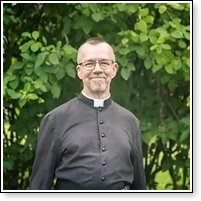
Below is the text of a recent homily given by Father Dennis Koliński, SJC, associate pastor at St. Peter Catholic Parish in Volo, Illinois. He’s also the author of Manual for Conquering Deadly Sin and Saint John Cantius The Good Teacher. Many thanks to Father Koliński and Father Joshua S. Caswell, SJC, superior general of the Canons Regular of St. John Cantius, for allowing me to publish this text in my column.
________________________
TALE OF THE MUSTARD SEED: Matthew 13:31-32Homily given by Father Dennis Koliński, SJC
St. Peter’s Church, Volo
November 15, 2026
 The kingdom of heaven is like a mustard seed that a person took and sowed in a field. It is the smallest of all the seeds, yet when full-grown it is the largest of plants. It becomes a large bush, and the ‘birds of the sky come and dwell in its branches.’ (Matthew 13:31-32)
When Jesus spoke of the mustard seed, He wasn’t so much trying to convey the grand size of the full grown mustard plant but rather the contrast between it and the seed from which it had come. Although they didn’t yet understand it, Jesus was telling His disciples that just as a seed smaller than a crumb could grow into a shrub towering ten feet tall, the seed He was planting in them would grow into a worldwide Church encompassing all peoples.
But allow me to expand on Jesus’ analogy by indulging in a little story.
The mustard seed that was sown grew and flourished, standing at the center of a large garden, surrounded with beautiful roses and other sweet-smelling flowers of every color. A spring of crystal clear water bubbled up beside it and flowed out in all directions to water the garden. The birds, who took refuge in its branches, helped the Gardener maintain the garden, by cultivating the soil around the flowers so that they could grow better and by plucking out weeds that had taken root among them.
But after some time, something unusual began to happen. The birds took less care in tending the garden. They no longer cultivated the soil around the flowers because they had found other things to do with their time that fulfilled their desires. They weren’t particularly bothered by the weeds that grew among the flowers, so they let them grow. And eventually, some of them grew so large so that they became large trees that began to overshadow the mustard tree. They weren’t anything like the mustard plant, which grew straight and whose branches spread out on all sides in perfect symmetry. Instead, these wild trees had strange twisted branches covered with long sharp thorns. The flowers in the garden filled the air with a fragrant odor but the wild trees had large brightly colored flowers with no smell. Attracted by them, the birds that had loved to perch on the branches of the mustard tree now began to fly over and perch on branches of the prickly, distorted trees. Becoming intoxicated with the poisonous nectar of the wild flowers, many of the birds impaled themselves on thorns as they tried to perch on the trees.
Eventually, the trees had grown so large so that little sunlight reached the mustard tree. The center of the garden became dark and foreboding. Because the trees had sucked the very life out of the soil, it had become so hard that it was like rock and the crystal clear living water that still flowed from the base of the mustard tree wasn’t even absorbed by the hardened ground. Horrifying repulsive creatures and large hideous insects now inhabited the dense forest that had grown around the mustard tree. Stifling smoke reeking of sulfur seeped out of fissures in the hardened soil and strange twisted vines grew out from them. Wrapping their tentacles around some of the branches of the mustard tree they made the leaves wither and fall off.
It had become very dark but a soft glow still emanated from the crystal clear life-giving water that now gathered in pools around the mustard tree. The Gardener, who had not forgotten about his favorite plant continued to cultivate the ground around it, even though many of the birds were no longer interested in helping Him. He cut off the twisted vines, cut back the dead branches and threw them into a fire because they no longer had life in them. He carefully pruned back the tree, so that those branches that were still living would grow better and healthier. It was now a much smaller shrub that it had been before and was dwarfed even more by the thick forest surrounding it, but it was stronger, and strangely, even more vibrant.
The thick forest surrounding the mustard shrub had become very ugly. Its flowers had become deformed. All of the birds that drank of their nectar became blinded, so that instead of seeking out refuge in the mustard tree, they grew confused and only flew further into the dark reaches of the forest. Some of them began attacking each other and wars broke out among the birds. Those that sought refuge in the peace of the mustard tree, nonetheless, had to constantly defend themselves from the aggression of the hostile birds from the dark forest. The branches of the trees had grown so big that they were beginning to sag from their own weight and break off, revealing patches of the sky above.
The Gardener knew that those birds, that had remained in the shelter of the mustard’s branches, were scared, constantly wondering if the forest surrounding them would grow in upon them and choke out the safe refuge that had sheltered them for so long. But He told them, that despite the horror of all that they saw around them, there nonetheless, was no need to despair. He gently reassured them that He would never abandon them and that the mustard tree would never be destroyed. In fact, He told them that the dark forest would eventually fall from its own weight and that a new garden would arise in its place. He told them that although they can’t yet see it, the dawn was breaking on the horizon and that the mustard tree would once again grow tall and strong. It bright green leaves would shine in the sun and birds of every kind would come to rest in its branches. The Gardener told them to have hope for a new day was dawning.
The meaning of the parable of the mustard seed is very clear. The mustard seed sown in the soil of Palestine is the Church, the seed of faith, which Christ planted in the hearts of His disciples. Seen in the scale of the entire earth and all history, His activity as one man was really rather limited and the immediate results unspectacular—like the unassuming mustard seed. But virtually unnoticed in the great Roman Empire, this smallest of all seeds sprouted in the Upper Room and before long, through the labors of that first scruffy band of men, the Good News had spread to all corners of the Empire. The mustard seed is the mystical Body of Christ, which has grown into a mighty tree and spread its limbs out over the entire earth.
As illustrated in my little story the great shrub that grew from the mustard seed has, it seems, been overshadowed and marginalized in our times. The dark forest of evil continues to grow up around us on every side, encroaching upon us both from within and from without. We have both the distress of things such as various problems within the Church, as well as the growing threat of ever increasing religious persecution, and also now of radical Islam.
There will be more attacks as Satan attempts to expand his reign of evil. The dark ugly forest will continue to grow up around us. Many good, upright and faithful Christians are very afraid. We can’t understand what is going on in our Church or why the world has become so evil. It seems as if the whole world has gone insane, or perhaps even possessed by the devil.
The Church continues to become smaller as more Catholics abandon Her and as other betray Her from within. The tree that grew up from the mustard seed that Christ planted may have become somewhat smaller but it never died and the Gardener never abandoned it. He has not and will not abandon us, even if it looks as if the dark forest of evil is spreading everywhere around us, crowding us in.
One continually hears the question: If God is all good, why would He permit such evil things to happen? This is one of the greatest mysteries in this world. The answer to this question can be found, strangely enough, in the word “love.” God created us to love. He wants us to love Him and He wants us to love each other. But in order to truly love we must possess free will, and if we possess free will to love, then it must also be capable of rejecting love. If man did not have the freedom to choose evil, he would also not be free to love.
It looks as if our world has gone mad but this, in turn, is helping show us that we should not put our stock in this world. It should help us remember that this world is not our home and that the things we possess mean nothing in light of eternity. The uncertainties that we now have to live with will be a constant reminder that we have to live in such a manner that we may be ready to leave this world at any time. It is a call to holiness, radical holiness, like the saints of the first centuries of the Church, saints who were willing to give up this world for paradise.
Out duty is to trust in the Lord, for in Him alone is our hope and salvation. He hears the cries of our affliction and shelters us in the shadow of His wings, even if we aren’t aware of it. He will protect us and He will save us. He has promised us that the gates of hell shall not prevail against His Church. Trust in Him and nothing else.
_____________________________________________________________
NOTE TO RENEWAMERICA READERS:If you can help Stephen Stone, President and Editor of RenewAmerica.com with his medical expenses (for more information, click here), please consider sending a gift of any size to:
- GoFundMe.
- Steve’s PayPal account using his email address (editor@renewamerica.com)—that would especially help.
- DeeAnn Stone's Venmo account
- Or if you’d rather send a check, you could send it to:
Stephen Stone
PO Box 50502
Provo, UT 84605-0502
Please let us know if you send a check, by emailing Stephen using the above email address, so that we'll know when to check our PO box in town.
Thank you, and God bless,
RenewAmerica staff
© Matt C. Abbott
The views expressed by RenewAmerica columnists are their own and do not necessarily reflect the position of RenewAmerica or its affiliates.