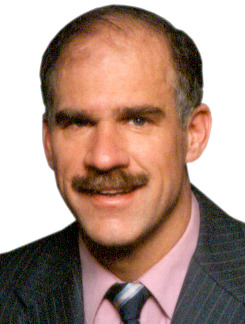
Robert Meyer


The contemporary definition that atheists prefer to use to describe their view is “lack of belief in God or gods.” This merely describes a psychological state. Under this minimalist definition, it could be argued that my water bottle or pet cat is an atheist. Obviously, an atheist person is of a differing cognitive situation than the aforementioned entities. Atheists often claim that there is a lack of evidence for the existence of God. Of course, this vague claim is totally subjective—but also notice that the atheist never bothers to articulate what would count as evidence. To me that makes the claim of lack of evidence at least arbitrary if not altogether meaningless. Christian apologist Alvin Plantinga has suggested that a lack of belief would naturally lead someone to agnosticism, but not atheism. Following his line of reasoning, I concur.
The biblical account regarding sufficiency of evidence is recorded in Romans chapter 1 verse 20.
“For since the creation of the world His invisible attributes, that is, His eternal power and divine nature, have been clearly perceived, being understood by what has been made, so that they are without excuse.” Yup, without excuse.
Nature, the conscience and the created order give each of us sufficient evidence to understand God’s handiwork and existence. And that sufficiency of evidence makes atheists without an excuse for denying it.
Abraham Lincoln famously said ““I can see how it might be possible for a man to look down upon the earth and be an atheist, but I cannot conceive how a man could look up into the heavens and say there is no God.”
This is my starting point for the assertion that atheism is irrational. The first problem with atheism is that atheists are in denial of the evidence that is clear to many people. The atheist can claim there is a lack of evidence, but the question is whether any evidence can prevail in a situation where such a strong psychological commitment is made toward unbelief. I hear this lack of evidence claim ad nauseam. It is meaningless unless you are either willing or able to communicate what precisely counts as evidence. Not only has no atheist ever done this in my presence, but none has even considered that they ought to do it. This condition, theologically speaking, is identified as suppressing the truth in unrighteousness.
A situation analogous to this may be described as follows. Often during the summer months someone hosts a swimming pool party. At the party, people will play water volleyball. At some point everyone will be distracted and some wise guy will snatch the ball, sit on top of it, and exclaim “where’s the ball, where’s the ball,” with his hands in the air. Now he knows where the ball is and so does everyone else, but with his mouth he won’t admit it. Everyone including the atheist knows there is a God, but won’t admit it.
Many claim that atheism is not a worldview. They say atheism makes no positive claims, and thus has nothing to prove. But I would submit that the moment atheists attempt to reason or live according to that definition, he/she is unable to do so. Dan Barker, co-president of the Madison, Wisconsin based FFRF, contends that atheism makes no positive existence claims, yet his organization in the past placed a sign on the Wisconsin Capital Christmas display which reads:
“At this season of the Winter Solstice, may reason prevail.
"There are no gods, no devils, no angels, no heaven or hell."
"There is only our natural world. Religion is but myth and superstition that hardens hearts and enslaves minds.” Reads like a positive existence claim to me.
Atheists will also claim that they aren’t part of a movement and have no leaders as Christians do. Yet it is affirmed that the Four Horsemen of New Atheism have been Richard Dawkins, Sam Harris, Christopher Hitchens, and Daniel Dennett, who have been prominent figures advocating for atheism and criticism of religion, though this iteration of atheism has lost some steam.
Jeffrey J. Louder, co-founder of Internet Infidels, concedes the liability of the attempts to fine-tune the definition of atheism when he states, "The atheist movement keeps shooting itself in the foot by failing to reach a consensus regarding the meaning of atheism." Louder seems to disagree with both the non-movement and single definition claim.
The Stanford Encyclopedia of Philosophy attributes several definitions to atheism as explained in the bracketed citation below.
[The word “atheism” is polysemous—it has multiple related meanings. In the psychological sense of the word, atheism is a psychological state, specifically the state of being an atheist, where an atheist is defined as someone who is not a theist and a theist is defined as someone who believes that God exists (or that there are gods). This generates the following definition: atheism is the psychological state of lacking the belief that God exists. In philosophy, however, and more specifically in the philosophy of religion, the term “atheism” is standardly used to refer to the proposition that God does not exist (or, more broadly, to the proposition that there are no gods). Thus, to be an atheist on this definition, it does not suffice to suspend judgment on whether there is a God, even though that implies a lack of theistic belief. Instead, one must deny that God exists. This metaphysical sense of the word is preferred over other senses, including the psychological sense, not just by theistic philosophers, but by many (though not all) atheists in philosophy as well. For example, Robin Le Poidevin writes, “An atheist is one who denies the existence of a personal, transcendent creator of the universe, rather than one who simply lives his life without reference to such a being.” J. L. Schellenberg says that “in philosophy, the atheist is not just someone who doesn’t accept theism, but more strongly someone who opposes it.” In other words, it is “the denial of theism, the claim that there is no God.”
This definition is also found in multiple encyclopedias and dictionaries of philosophy. For example, in the Concise Routledge Encyclopedia of Philosophy, William L. Rowe (also an atheist) writes, “Atheism is the position that affirms the nonexistence of God. It proposes positive disbelief rather than mere suspension of belief.” The Cambridge Dictionary of Philosophy recognizes multiple senses of the word “atheism”, but is clear about which is standard in philosophy:
[Atheism is] the view that there are no gods. A widely used sense denotes merely not believing in god and is consistent with agnosticism [in the psychological sense]. A stricter sense denotes a belief that there is no god; this use has become standard. (Pojman 2015, emphasis added)
Interestingly, the Encyclopedia of Philosophy recommends a slight broadening of the standard definition of “atheist.” It still requires rejection of belief in God as opposed to merely lacking that belief, but the basis for the rejection need not be that theism is false. For example, it might instead be that it is meaningless.]
We will continue in part 2.
© Robert MeyerThe views expressed by RenewAmerica columnists are their own and do not necessarily reflect the position of RenewAmerica or its affiliates.